
When Jonathan acquired a 12-unit apartment complex in Bend, the property was rough. Years of deferred maintenance had caught up with it. The grounds were so cluttered that two full dumpster containers were needed just to clear the debris. Several tenants were living in near-hoarder conditions. The building looked tired, and its reputation matched.
Most people would’ve walked away. We saw an opportunity. Bend’s rental market was missing quality, modern mountain-style apartments at a fair price. This building could be that.
Here’s how we turned a neglected apartment complex into one of Bend’s most desirable rental communities. And doubled the property’s annual income in the process.
The Situation: A Property in Disrepair
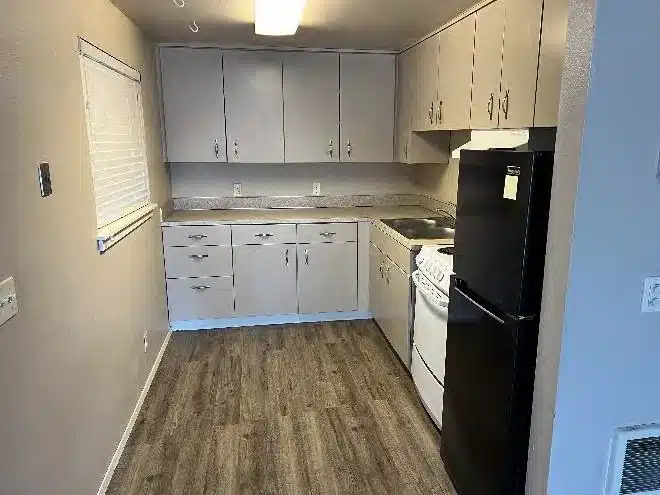
The 12-unit complex had been operating as affordable housing with government support. Average rents across the nine occupied units sat at roughly $850 per month. Long-time tenants had a contentious relationship with management. Emergency repairs were handled when they came up, but nothing proactive was being done.
The building had a bad reputation. The numbers showed it.
The previous owner didn’t have the funds to address the growing list of issues. Electrical panels in several units were outdated fire hazards. Rooftop solar water heating systems had stopped working years ago. Massive water tanks were taking up valuable space inside units. Siding was deteriorating. The roof needed work. Landscaping was nonexistent.
Annual rental income: $122,400. And the owner was paying all utilities on top of that.
What We Did: A Renovation Built on Strategy
This wasn’t a gut-and-pray renovation. Every decision mapped to a clear goal: fix safety issues first, then make targeted improvements that deliver the highest return.
The vision was a modern, mountain-style apartment community that would attract quality tenants and justify market-rate rents.
The property had three buildings. Two would be brought to full market rent through complete renovation. The third needed to stay affordable per state requirements on the title, so it got a lighter touch-up.
Tackling Deferred Maintenance and Safety First
Before any cosmetic work started, we addressed the critical stuff. Old electrical panels in four units were replaced. These were genuine fire hazards that couldn’t wait. The defunct rooftop solar systems were removed entirely, including the massive water tanks inside each unit. That alone opened up significant living space tenants hadn’t been able to use in years.
Plumbing repairs were completed throughout the property. A thorough investigation by our plumber revealed the overall system was in better shape than we originally thought. That helped keep the budget in check.
Exterior Transformation
The outside of the building was completely transformed:
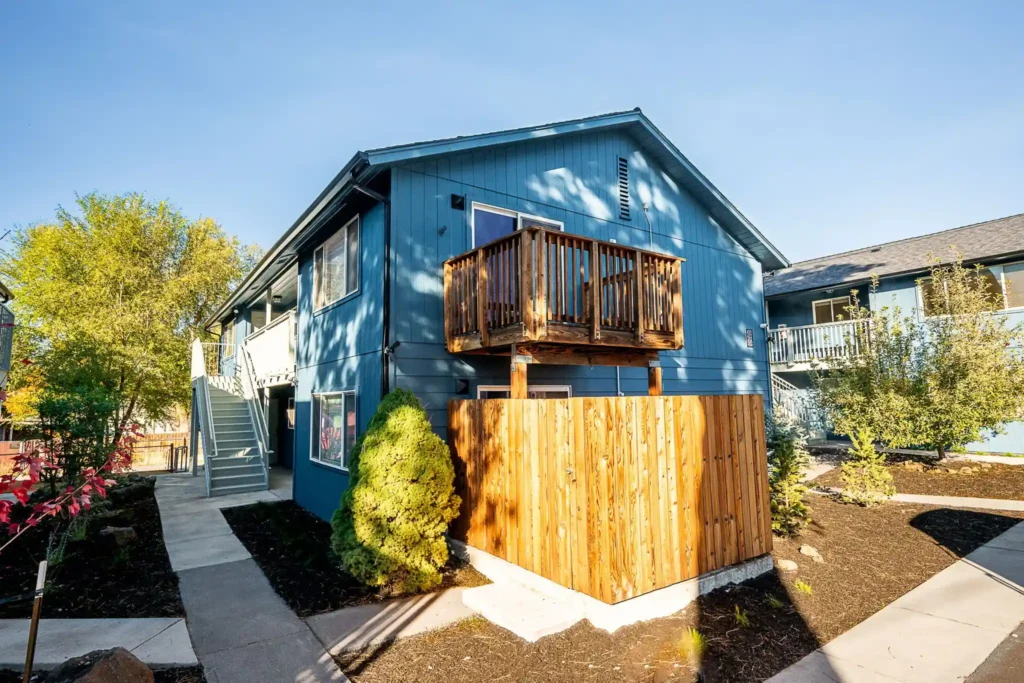
- New siding and a full exterior paint job
- Roof work and new gutters to address years of weather damage
- New exterior lighting for safety and curb appeal
- Complete landscaping overhaul: new plants, grass, irrigation, trees, and outdoor seating
- Modern signage that told the neighborhood this was a different property now
Interior Renovation
Inside the units, the scope was extensive:
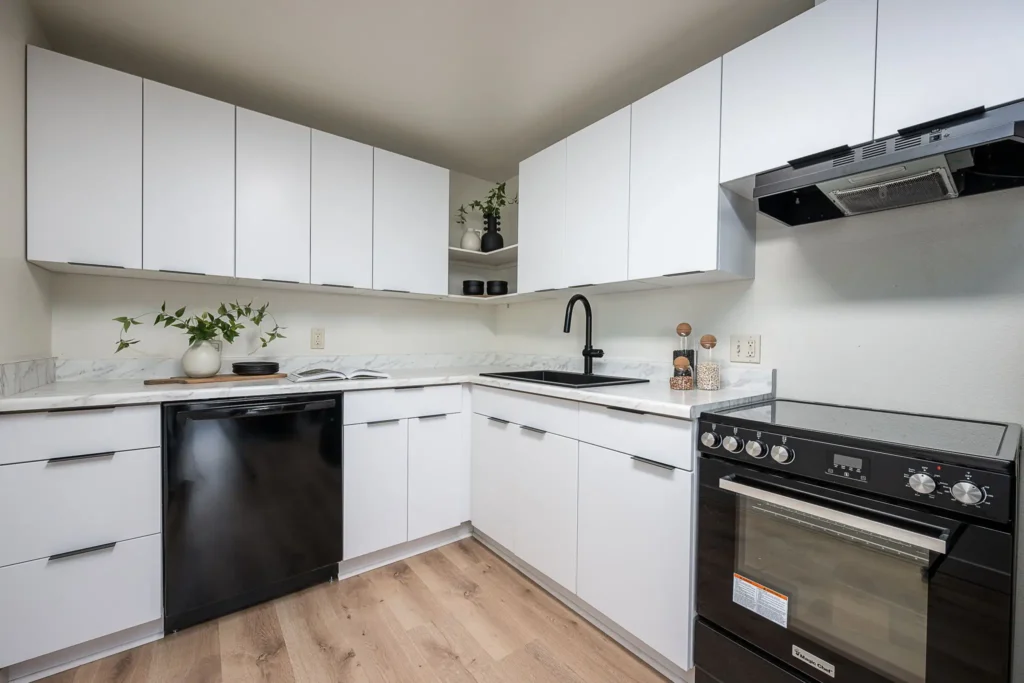
- Six units got completely new kitchens (two had been previously remodeled, and the affordable units were touched up)
- All new appliances across every renovated unit
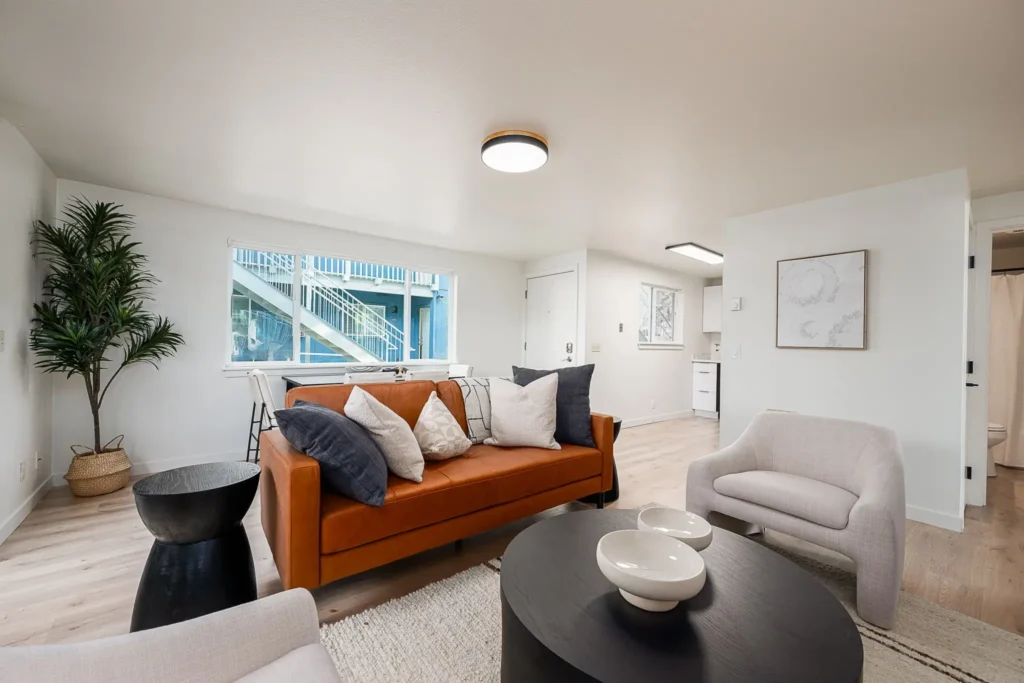
- New flooring throughout
- New laundry stacks in each unit, with layout changes to make the space work
- Complete repaint of every surface
- New fixtures, lighting, vanities, and bathrooms
- New mini-split heating and cooling in all units
- New finish hardware throughout
- Water submeters installed so tenants pay their own utilities
- Deep cleaning of every unit. Some of these probably hadn’t been cleaned in years.
Managing the Transition with Tenants
Executing a major renovation while being fair to existing tenants is one of the hardest parts. Under rent control regulations, we provided 90-day notices to all tenants. Each received a one-month relocation fee upfront as required by law. Our team actively helped tenants find new housing during that period.
Exterior work started while tenants were still in the building. Interior renovation began as units were vacated. The heavy interior work happened after tenants moved out, but we completed as much as possible while people were still there to keep the timeline moving. We started leasing completed units even as finishing work continued in others.
The Results: A Complete Transformation
Rental Income: Doubled
The numbers tell the story:
- Before renovation: Average rent of $850/month across 9 occupied units. $122,400 annual income.
- After renovation: Average rent of $1,600/month across all 12 units (affordable units at $1,285/month). $230,400 annual income.
- Utility savings: Tenants now pay most utilities directly, saving roughly $22,000 per year.
- Total income increase: Over 100%. Rental income more than doubled.
Property Value: Up 67%
Taking the purchase price and total renovation investment against the new appraised value, the property’s value increased by approximately 67%.
Timeline: Faster Than Expected
The renovation took about six months. The entire process from purchase to full occupancy and refinance took 10 months total. We’d planned for 12 to 18 months.
The project came in over budget on the renovation side. But the time savings more than made up for it. Fewer months of interest payments and earlier rent collection offset the extra construction costs.
Tenant Quality: Night and Day
Before the renovation, the property had problematic tenants and a contentious management dynamic. We invested serious effort in vetting every new applicant. Not just income and credit, but overall fit with the building’s community.
It paid off. The property now has high-quality tenants who are quiet, respectful, and easy to work with. We have a strong relationship with every resident. The building’s reputation in the neighborhood has completely turned around.
Why This Matters for Bend Property Owners
This project shows what happens when property management goes beyond collecting rent checks. Strategic renovation planning, disciplined project management, and a clear vision for market positioning turned a neglected asset into a thriving rental community.
The renovation was just part of it. After the work was done, our leasing team filled all 11 vacant units in 90 days during winter, in one of Bend’s most competitive rental markets. A quality renovation paired with a disciplined leasing strategy is what turned this property around completely.
If you’re sitting on an underperforming multifamily property in Bend or Central Oregon, the lesson is clear. The right renovations, executed well, don’t just improve a building. They transform the entire investment.
Frequently Asked Questions
How much does it cost to renovate an apartment complex in Bend, Oregon?
Costs vary widely depending on scope. For this 12-unit project, the investment covered electrical panel replacements, full kitchen remodels, new flooring, mini-split HVAC, exterior siding and paint, landscaping, and more. The key is matching renovation spending to market rent potential. Every dollar should generate a measurable return.
How long does a multifamily renovation take in Central Oregon?
This project took about six months for the renovation phase. The total from purchase through full occupancy and refinance was 10 months. Planning, contractor availability, and permit timelines in Bend all affect the schedule.
Can you renovate an apartment building while tenants are still living there?
Yes, but it takes careful planning. In this project, exterior work started while tenants were still in place. Interior renovation began as units were vacated under proper legal notice. The goal is to minimize disruption while keeping the project moving.
How much can renovations increase rental income on a Bend apartment?
In this case, average rents went from $850 to $1,600 per month. Switching utility billing to tenants saved an additional $22,000 per year. Results depend on the property, location, and scope of work. But strategic renovations in Bend’s strong rental market consistently deliver solid returns.
Have a Rental Property in Bend That Needs Updating?
Whether it’s a full renovation or targeted improvements, Ridgeline Property Management in Bend can help you plan and execute a strategy that makes financial sense. We know the Central Oregon market. We manage the construction process. And we handle the leasing when it’s done.
Get a free rental analysis or call us at (541) 550-7347.